Business Finance Guides
Running a business demands more than a great product or service. Without a firm grip on your finances, even promising ventures can stall. Knowing how to manage business finances can play a major role in whether a company survives its early years.
Small business financial management covers everything from reading a balance sheet to choosing the right loan. It includes budgeting, cash flow forecasting, credit building, and understanding which financing tools fit your stage of growth. These aren't skills reserved for accountants or CFOs. Every owner who signs a lease, hires an employee, or takes on a line of credit is making financial decisions that compound over time.
This guide walks through the core areas of financial management for small business owners. Each section links to deeper resources so you can move from overview to action at your own pace. Whether you're launching your first company or tightening operations at an established one, the fundamentals here apply across industries and revenue levels.
Think of this page as your starting point for business finance basics. Revisit it when questions come up, and use the linked guides to go deeper on the topics that matter most to your situation right now. Whether you need help managing business finances day to day or preparing for a major financing decision, the resources below have you covered.
Understanding Your Business Finances
Before you can manage money well, you need to understand what the numbers on your financial statements actually mean. Three concepts form the foundation of nearly every financial decision you'll make as a business owner: cash flow, the difference between revenue and profit, and your balance sheet.
Cash Flow: The Lifeblood of Your Business
Cash flow is the movement of money in and out of your business over a given period. Positive cash flow means more money is coming in than going out. Negative cash flow means the opposite, and cash flow problems are one of the most common reasons small businesses struggle or fail, including businesses that look profitable on paper.
A company can be profitable on paper and still run out of cash. This happens when revenue is tied up in unpaid invoices, inventory, or long payment terms while expenses like rent, payroll, and loan payments keep arriving on schedule. Understanding this gap is the first step toward managing it.
Revenue vs. Profit
Revenue is the total money your business brings in from sales. Profit is what remains after you subtract all costs: materials, labor, overhead, taxes, and debt service. Many owners focus on top-line revenue, but profit margin is one of the key metrics that helps determine whether your business is sustainable.
Net sales revenue, specifically, accounts for returns, allowances, and discounts. It gives you a clearer picture of actual earnings than gross revenue alone. For a detailed breakdown of how to calculate and interpret this number, read our guide on understanding net sales revenue.
Balance Sheet Fundamentals
Your balance sheet shows what your business owns (assets), what it owes (liabilities), and the difference between the two (equity). Lenders review this document before approving financing. Investors use it to assess risk. You can use it to track whether your business is building wealth or accumulating debt.
One concept that appears frequently on balance sheets and loan agreements is amortization. It affects how loan payments are structured and how assets depreciate over time. If you've ever wondered how your monthly payment breaks down between principal and interest, our guide on amortization vs. simple interest explains the mechanics clearly.
Building and Protecting Your Credit
Your credit profile affects what financing you can access, at what rates, and on what terms. For small business owners, credit is a tool. Used well, it can open doors to growth capital. Neglected, it can limit your options when you need them most.
Business Credit vs. Personal Credit
Many new business owners don't realize that business credit and personal credit are separate systems with different scoring models, reporting agencies, and impacts on your financial life. Mixing the two, or relying solely on personal credit for business expenses, creates risk on both sides.
Establishing a distinct business credit profile can help protect your personal finances and build a track record that lenders and vendors can evaluate independently. Our guide on business credit vs. personal credit breaks down the differences and explains how to start building business credit from scratch.
Repairing and Maintaining Your Credit
Credit issues don't have to be permanent. If errors, disputes, or past financial hardship have damaged your credit report, there are legitimate steps you can take to address them. Learn the process in our guide on how to remove negative items from your credit report.
Some business owners also wonder whether financing is available without a traditional credit check. While options exist, they come with trade-offs worth understanding. Read about them in can you get a credit line with no credit check.
Cash Flow Management
Understanding cash flow as a concept is one thing. Managing it day to day, month to month, and across seasons is where the real work happens. Two practices often make a major difference: maintaining adequate cash reserves and preventing your accounts from dipping into the red.
Building a Cash Reserve
A cash reserve is your buffer against the unexpected: a slow month, a major equipment repair, a client who pays late, or an economic downturn. A common rule of thumb is three to six months of operating expenses, but the right amount depends on your industry, overhead structure, and revenue consistency.
Calculating your target reserve requires looking at fixed costs, variable costs, and historical revenue patterns. Our guide on how to calculate your business's cash reserve walks through the formula and provides benchmarks by business type.
Avoiding Negative Balances
A negative bank balance can trigger overdraft fees, strain vendor relationships, and cascade into missed payroll or bounced payments. The causes are usually predictable: poor timing between receivables and payables, insufficient forecasting, or growing faster than cash flow supports.
Prevention starts with weekly cash flow monitoring and a clear understanding of your payment cycles. For practical strategies, read negative bank balances: how to avoid them.
Choosing the Right Financing
At some point, most businesses need external capital. The wrong choice can cost you in interest, flexibility, or both. The right choice can accelerate growth without straining operations.
Short-Term vs. Long-Term Financing
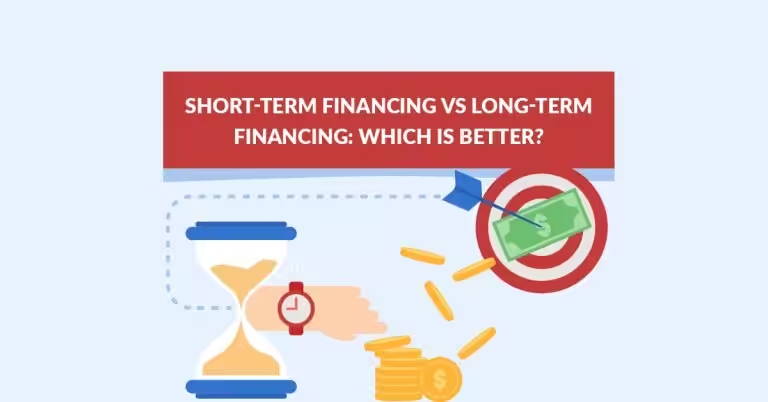
Short-term financing, such as lines of credit, merchant cash advances, or invoice financing, covers immediate needs like payroll gaps, inventory purchases, or seasonal ramps. You borrow for months, not years, and typically pay higher rates for that flexibility.
Long-term financing, including SBA loans, equipment financing, or term loans, funds larger investments like real estate, machinery, or expansion. Rates are generally lower, but commitments are longer and qualification requirements are often stricter.
Matching the financing term to the asset or need it funds is a basic principle. A piece of equipment with a ten-year useful life should be financed over years, not with a six-month cash advance. Our comparison of short-term financing vs. long-term financing helps you match the right tool to the right situation.
Understanding the Benefits
Financing isn't just about covering shortfalls. Used strategically, it can let you take on larger contracts, stock inventory ahead of demand, upgrade equipment, and hire ahead of growth. The 8 benefits of financing for small businesses outlines the strategic advantages beyond simply filling a cash gap.
Equipment and Specialized Financing
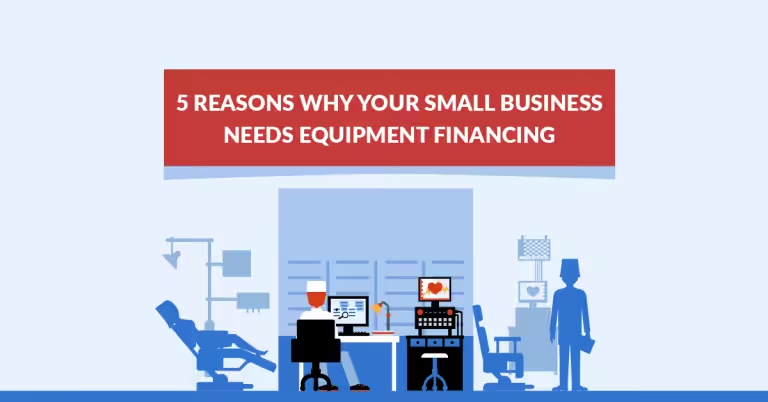
Equipment financing is one of the more accessible forms of business lending because the equipment itself serves as collateral. This often makes approval easier, and rates may reflect the reduced risk to the lender. Whether you're purchasing vehicles, machinery, technology, or specialized tools, understanding your options can help prevent overpaying. Explore the details in our guide on equipment financing options.
Setting Up the Right Accounts
Your business checking account is the operational hub of your finances. The right account minimizes fees, integrates with your accounting software, and provides the transaction limits your business needs. The wrong one can quietly drain money through maintenance fees and restrictive terms. See our breakdown of the 5 best business checking accounts to find one that fits.
Budgeting and Financial Planning
A budget is a financial plan expressed in numbers. It tells you where your money should go before you spend it, and it reveals where your assumptions were wrong.
Building a Budget That Works
Effective small business budgeting starts with historical data. Look at what you actually spent last quarter or last year, not what you wish you had spent. From there, build forward with realistic revenue projections and categorized expenses.
The goal isn't to create a rigid document you ignore by February. It's to build a living tool you review monthly and adjust as conditions change. Our guide on small business budgeting covers the fundamentals, while smart budgeting hacks for your small business offers practical shortcuts that save time without sacrificing accuracy.
The Entrepreneur's Triple Role
Every business owner wears multiple hats: technician, manager, and entrepreneur. Financial management touches all three roles. As a technician, you need to understand job costing. As a manager, you need to track overhead and labor. As an entrepreneur, you need to see the big picture and allocate capital toward growth.
Balancing these roles is one of the hardest parts of running a business. Our guide on mastering three roles of successful entrepreneurs explains how to develop each skill set without burning out.
Staying Ahead: Trends and Tools
The tools available to small business owners have expanded significantly over the past decade. AI-powered accounting software, automated invoicing, cash flow forecasting apps, and digital lending platforms have made small business financial management faster and more accessible.
Artificial intelligence, in particular, is changing how owners analyze data, predict cash flow, and identify inefficiencies. Read about the practical applications in how business owners are using AI.
Beyond technology, shifts in lending markets, interest rates, and regulatory environments create both risks and opportunities. Staying informed gives you a competitive advantage. Our overview of emerging trends small businesses should watch covers what's coming and what it means for your financing decisions.
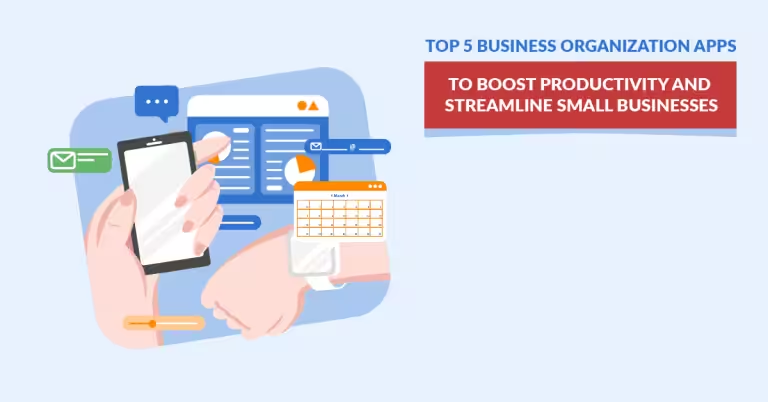
For day-to-day operations, the right apps can save hours each week on tasks like expense tracking, invoicing, and scheduling. See our list of 5 must-have business apps to keep your operations organized.
Frequently Asked Questions
What is the difference between amortization and simple interest?
Amortization spreads loan payments over time in scheduled installments that include both principal and interest. Early payments often go more heavily toward interest, while later payments shift more toward principal. Simple-interest loans generally calculate interest without a full amortization schedule, and the exact method depends on the loan terms. The structure affects your total borrowing cost and how quickly your balance declines. Read the full comparison in our amortization vs. simple interest guide.
How much cash reserve should a small business have?
A common rule of thumb is three to six months of operating expenses as a cash reserve. However, the right number depends on your industry's volatility, your revenue consistency, and whether you have access to a line of credit as a secondary buffer. Seasonal businesses and those with long invoice cycles may need to aim for the higher end. Calculate your specific target with our cash reserve guide.
What is the difference between business credit and personal credit?
Business credit is tied to your company's EIN and tracked by agencies like Dun & Bradstreet, Experian Business, and Equifax Business. Personal credit is tied to your Social Security number and is commonly scored using consumer credit models such as FICO. They use different scales, different data, and affect different aspects of your financial life. Separating them helps protect your personal finances and builds a credit profile that lenders can evaluate on its own merits. Learn more in our business vs. personal credit guide.
What is a confession of judgment and why should I avoid it?
A confession of judgment is a clause in some financing agreements where the borrower agrees in advance to let the lender obtain a court judgment without notice or a hearing if the borrower defaults. It effectively limits your ability to defend yourself in court. These clauses are most common in merchant cash advances and some alternative lending products. Some states have banned or restricted their use in certain contexts. Always read financing agreements carefully and consult an attorney before signing anything that includes this provision.
Should I choose short-term or long-term financing?
Match the financing term to the useful life of what you're funding. A piece of equipment that will last ten years should be financed with a long-term loan, not a six-month cash advance. Working capital needs like covering payroll during a slow season are often better served by short-term options like a line of credit or invoice financing. Using long-term debt for short-term needs, or vice versa, can create unnecessary cost and risk. Our short-term vs. long-term financing guide covers the decision in detail.
What are the first steps to managing my business finances better?
Start with three actions: separate your business and personal bank accounts, set up basic bookkeeping (even a spreadsheet works initially), and review your cash flow weekly. From there, build a monthly budget, establish a cash reserve target, and check your business credit report. These fundamentals apply whether you're generating $50,000 or $5 million in annual revenue. As your business grows, you can layer in more sophisticated tools like forecasting software and professional advisory services.
Take the Next Step With Your Business Finances
Managing your finances well creates options. It gives you the ability to invest in growth, weather downturns, and negotiate from a position of strength. The guides linked throughout this page cover every major topic in depth, so you can go as deep as your situation requires.
When you're ready to explore financing options that fit your business, Reil Capital can help. We help small business owners evaluate lending options that fit their needs, whether that's a line of credit, equipment financing, invoice factoring, or an SBA loan.
Explore our financing options or apply now to start a conversation about what's possible for your business.