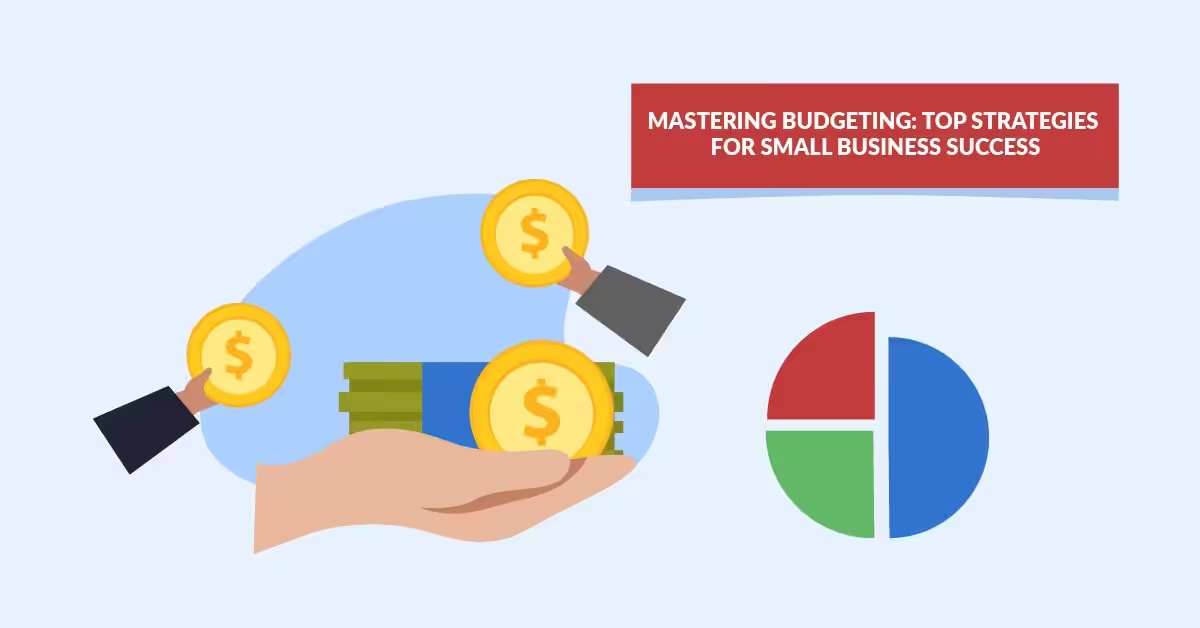
Building a working small business budget comes down to four steps in order: know your revenue, subtract your costs, set aside a contingency fund, and check the bottom line. Skip the order and the budget stops meaning anything — each step depends on the one before it.
For a deeper look at business finance strategies, explore our business finance resources.
Step 1: Look at Your Revenue
Start by analyzing your income streams in detail — where the money actually comes from, and where there’s room to grow. This is the number every later step gets measured against, so get it right before moving on.
Step 2: Subtract Your Costs
Split spending into fixed costs (payroll, rent, utilities — the ones that happen regardless of activity level) and variable costs (spending that scales up or down with usage, like marketing or materials). Fixed costs set your baseline; variable costs are what you can trim first when money gets tight, and what you can expand first when it doesn’t.
Step 3: Build In Contingency Funding
Whatever’s left after fixed and variable costs is your contingency fund — a safety net for the unexpected expense that always shows up eventually. If your budget doesn’t leave enough room for one, a business line of credit gives you backup capacity without tying up cash you don’t have.
You may also find it helpful to read Amortization vs. Simple Interest Loans: Choosing the Right Option.
Step 4: Check the Bottom Line
A regular profit-and-loss statement is what turns a budget into an actual management tool — it shows the trend across periods, not just a single month’s snapshot. If the bottom line consistently comes in lower than you need, that’s the signal to look at financing rather than cutting further.
For a different perspective on business funding, explore How a Debt Management Plan Can Help Your Business Save Money and Stay Afloat.
Prefer a broader list of budgeting habits instead of a step-by-step process? See our 7 small business budgeting tips.
How REIL Capital Helps
When your budget’s bottom line points to a real financing gap, REIL Capital’s line of credit and other products can bridge it. Apply with REIL Capital to see what fits your situation.
FAQ
What’s the right order to build a small business budget?
Revenue first, then costs (fixed and variable), then a contingency fund from what’s left, then a regular profit-and-loss check. Each step depends on getting the one before it right.
What’s the difference between fixed and variable costs?
Fixed costs (rent, payroll, utilities) happen regardless of activity level. Variable costs (marketing, materials) scale with usage — they’re the first thing to trim when money’s tight and the first thing to expand when it isn’t.
What if my budget doesn’t leave room for a contingency fund?
A business line of credit gives you standing backup capacity you draw only when needed, without tying up cash you don’t currently have — useful when the budget itself can’t yet support a full cash reserve.