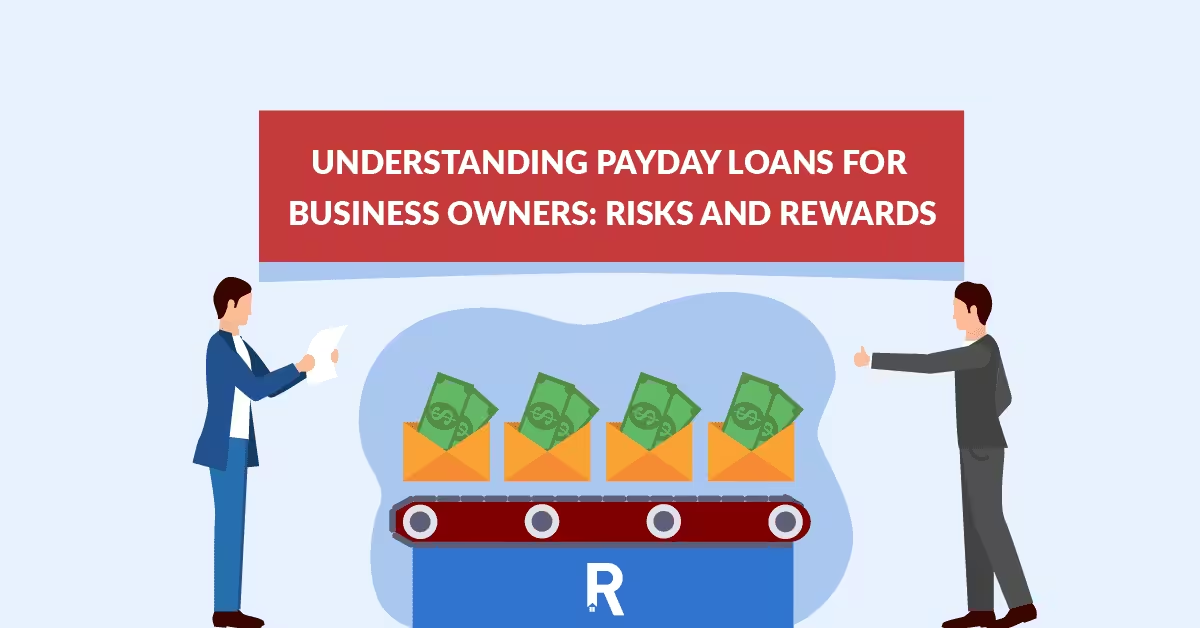
“Business payday loan” almost always refers to a merchant cash advance or an ACH-repayment short-term product, not a literal payday-loan license product. These are priced with a factor rate rather than a traditional APR, and effective costs run very high — commonly cited APR-equivalents reach the low-to-mid hundreds of percent, with ACH-style loans often exceeding 200%, depending on the factor rate and holdback structure.
You may also find it helpful to read Boosting Your Business Credit Line: Tips for Growing Your Financial Capacity.
What “Business Payday Loan” Actually Means
There’s no dedicated payday-loan license for businesses the way there is for consumers in some states. In practice, the term describes a fast-funding, short-repayment-term product — usually an MCA or an ACH-repayment loan — that trades speed and minimal underwriting for a high cost of capital.
What It Actually Costs
These products are quoted as a factor rate (a fixed multiplier on the amount borrowed), not an APR — a 1.3 factor rate on $10,000 means $13,000 owed regardless of term length. Converted to an APR-equivalent for comparison purposes, effective costs commonly land in the low-to-mid hundreds of percent, with ACH-style products often exceeding 200%. The faster the repayment term and the higher the holdback percentage, the higher the effective cost. Repeated advances against future receivables can compound into a debt spiral if the underlying cash-flow problem isn’t fixed first — that risk is the real reason these products carry a warning, not just their sticker cost.
When It Might Still Make Sense
- Genuine emergency expenses — equipment failure or an urgent inventory buy where the cost of not acting exceeds the cost of the advance.
- Short seasonal cash-flow gaps — bridging a slow month you can clearly see the end of.
- A narrow, time-limited opportunity — a bulk-purchase discount or short promotional window with a clear payback plan.
Lower-Cost Alternatives to Try First
Before taking on factor-rate financing, it’s worth ruling out lower-cost options: SBA and CDFI microloans (up to $50,000, with SBA-backed rate structures well below factor-rate products), a business line of credit you draw only when needed, or invoice factoring (typically an 80–90% advance on outstanding invoice value) if the real problem is receivables sitting unpaid rather than a true cash shortfall.
Looking for more options? Read The Debt Avalanche Method: A Smart Way to Tackle Business Debt Efficiently.
For a fuller side-by-side of what a transparent, disclosure-compliant merchant cash advance looks like versus this product, see Payday Loans for Business Owners: Why There’s a Better Way.
Before You Apply
Run the total repayment cost against your actual cash flow, not just the funding amount — a fast approval doesn’t help if the holdback percentage strains daily operations. Confirm you understand the exact factor rate and holdback before signing, and build a plan for what happens if you need a second advance before the first is repaid, since that pattern is where the real risk lives. Strategic financial planning — a cash reserve, disciplined budgeting practices, and matching financing type to the actual need — reduces how often you need a product like this at all.
How REIL Capital Helps
REIL Capital works through options across the cost spectrum — lines of credit, invoice factoring, and SBA-backed products among them — so a fast-funding need doesn’t automatically mean the highest-cost option. Talk to REIL Capital about what fits your situation.
FAQ
Is a business payday loan the same as a merchant cash advance?
In practice, yes — “business payday loan” is market shorthand for an MCA or ACH-repayment short-term product, not a distinct regulated loan type. Both are priced with a factor rate and carry very high effective costs.
What does a business payday loan really cost?
Costs are quoted as a factor rate, not an APR. Converted to an APR-equivalent, effective costs commonly run into the low-to-mid hundreds of percent, with ACH-style products often exceeding 200%, depending on the factor rate and holdback structure.
What’s a cheaper alternative to a business payday loan?
SBA or CDFI microloans (up to $50,000), a business line of credit you draw only as needed, and invoice factoring (typically 80–90% advance on unpaid invoices) are the standard lower-cost alternatives worth ruling out first.