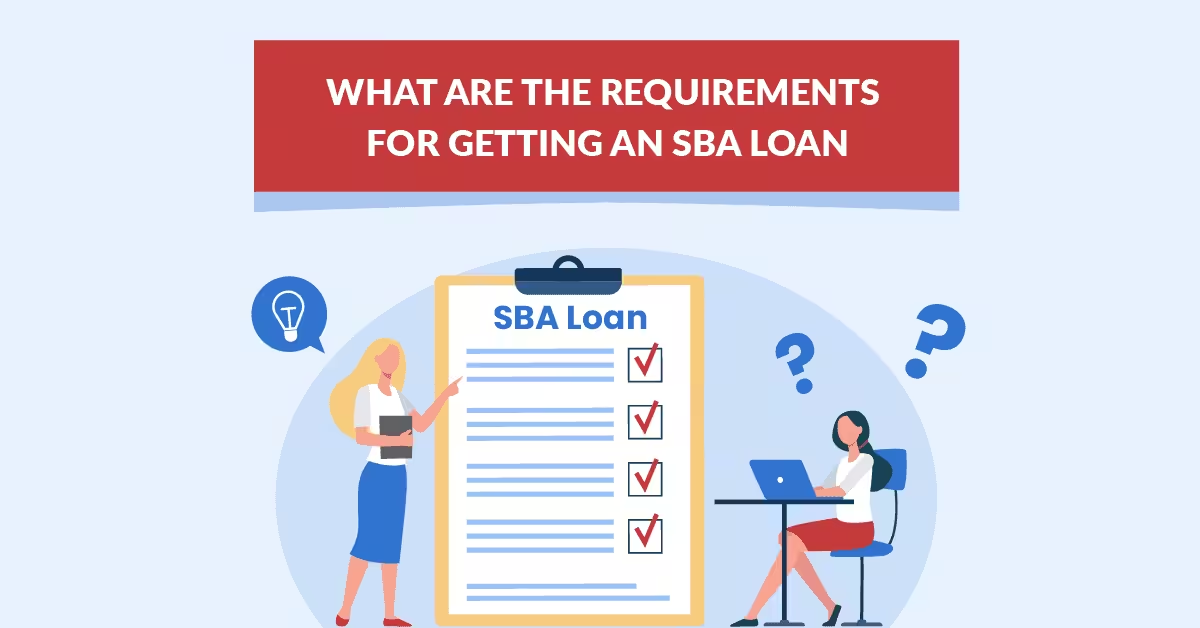
SBA itself sets no official minimum credit score — but in practice, most 7(a) lenders look for a 680+ personal FICO score, and many still run the FICO SBSS business-credit score as part of underwriting even though SBA no longer mandates it. Beyond credit, lenders check operational legitimacy, collateral, and documented ability to repay. This guide covers every real requirement, in the order lenders actually check them.
SBA Loan Programs at a Glance
- 7(a) loan: the flagship program, up to $5 million, for working capital, equipment, inventory, real estate, and eligible debt refinancing.
- SBA Express: up to $500,000, with a 36-hour lender decision (not funding) and a lower SBA guarantee in exchange for speed.
- 504 loan: up to $5.5 million standard (higher for eligible manufacturing/energy projects), through a Certified Development Company paired with a conventional lender, for real estate and long-term equipment only — not working capital.
- Microloan: up to $50,000 through nonprofit intermediary lenders, for startups and smaller-revenue businesses.
- Export Express / Export Working Capital: for businesses financing international trade activity, carrying a higher SBA guarantee than standard 7(a).
As of July 2026, qualified borrowers can also access up to $5 million through 7(a) and up to $5 million through 504 simultaneously — a new combined $10 million ceiling, up from the prior $5 million shared cap.
Business Operations Requirements
- For-profit and legally operating in the U.S. or its territories — nonprofits don’t qualify.
- Eligible industry: lending, gambling, and political/lobbying-focused businesses are excluded.
- SBA size standards met for the specific industry — these are set per NAICS code and expressed as either revenue or employee-count thresholds, not a flat number across all industries. Check the exact threshold at SBA’s Size Standards Tool rather than assuming a universal cap.
- Demonstrated need for financing — an inability to get comparable credit on reasonable terms elsewhere, with a clear, sound business purpose for the funds.
- Owner equity investment in the business — capital or substantial time commitment, showing real skin in the game.
Related: veteran-owned businesses meet the same core requirements above, with one added benefit on Express loans — see SBA loans for veterans: what actually changes.
Credit and Financial Requirements
Financial stability is where most applications actually get decided. Here’s what lenders check, with current benchmarks:
- Personal credit score: most 7(a) lenders look for 680+ FICO, though some approve strong-cash-flow deals as low as 650. There’s no official SBA minimum — lenders set their own bar.
- Business credit / SBSS score: the FICO Small Business Scoring Service blends personal credit, business credit bureau data, financials, and application details into a single 0–300 score. SBA’s own minimum for 7(a) Small Loans had been set at 165, but effective March 2026 SBA no longer mandates SBSS specifically — lenders can use their own credit model of choice. In practice, most lenders’ underwriting systems are still built around SBSS, so it remains one of the most common inputs even though it’s no longer a fixed universal gate.
- Debt service coverage ratio (DSCR): lenders commonly want 1.15–1.25x — for every $1 of annual loan payments, your business needs to show $1.15–$1.25 of net operating income.
- Financial documentation: two to three years of cash flow records, balance sheets, profit and loss statements, and tax returns (business and personal, for 20%+ owners).
Related: can you get a business credit line with no credit check?
Collateral and Personal Guarantee Requirements
Collateral value gets discounted from market value — lenders don’t count it dollar-for-dollar. Typical valuation ranges: improved real estate in the high-80s-percent range of market value; unimproved land around half of market value; new machinery and equipment commonly three-quarters of purchase price; used equipment roughly half of net book value; furniture, fixtures, and inventory valued much lower, often around a tenth of book value. For loans over $350,000, personal residential or investment real estate must typically be pledged as collateral until the loan is fully secured — unless the owner’s equity in that property is under 25% of fair market value, in which case lenders can document a rationale for not requiring it.
Personal guarantees are required from any owner with 20%+ equity, and from a spouse whose combined ownership with the primary owner reaches 20%+. Guarantees can be unlimited (covering the full loan balance) or limited to a specific dollar amount or percentage, depending on ownership stake and loan size.
The Application Process
- Choose the right program for your actual use case — 7(a) for general purposes, 504 for real estate/equipment, Express if speed matters more than loan size.
- Assemble documentation: business and personal financial statements (2–3 years), a specific business plan, tax returns, and legal/business registration documents.
- Find an SBA-approved lender — not every bank processes SBA loans, and a Preferred Lender Program (PLP) lender can approve directly rather than routing through SBA’s own review, saving real time.
- Submit and undergo underwriting — the lender reviews credit, financials, and collateral before forwarding an approved loan to SBA for the guarantee.
- Close and fund. Total time from application to funding runs 60–90 days for standard 7(a), 30–45 days for Express, and 3–4 months for 504 real estate deals.
Improving Your Approval Odds
- Credit: set up automatic payments on existing obligations, pay down high balances, dispute credit-report errors, and keep older accounts open to preserve credit history length.
- Business plan: a specific, well-supported plan with real market research and realistic financial projections outperforms a generic template every time.
- Financial statements: work with your accountant to prepare accurate, signed, dated statements with a one-year income projection tied to historical performance.
How REIL Capital Helps
REIL Capital helps businesses match their financials to the right SBA program and build an application that leads with its strongest facts. Explore SBA 7(a) financing to see current terms and start the conversation.
FAQ
What credit score do I need for an SBA loan?
SBA sets no official minimum. Most 7(a) lenders look for 680+ personal FICO, with some approving 650 for strong-cash-flow deals. Business credit is also commonly checked via the FICO SBSS score — historically screened at 165+ for 7(a) Small Loans — though as of March 2026 SBA no longer requires lenders to use that specific score, so requirements now vary more by lender.
What are the five factors lenders evaluate for an SBA loan?
Credit history (personal and business), the owner’s vested financial interest in the business, available working capital, demonstrated ability to repay, and the management team’s experience and character.
What could get my SBA loan application rejected?
The most common drivers are weak credit, insufficient cash flow relative to the required debt service coverage ratio, high existing debt load, documentation gaps, and thin operating history. Character/legal issues — an owner under indictment or conviction for financial misconduct — are a hard disqualifier, not a lender judgment call.
How long does the SBA loan process take from application to funding?
Standard 7(a): 60–90 days. SBA Express: 30–45 days (the 36-hour figure is only the lender’s decision window, not funding time). 504 real estate loans: 3–4 months. A Preferred Lender Program lender can shave 2–4 weeks off any of these.