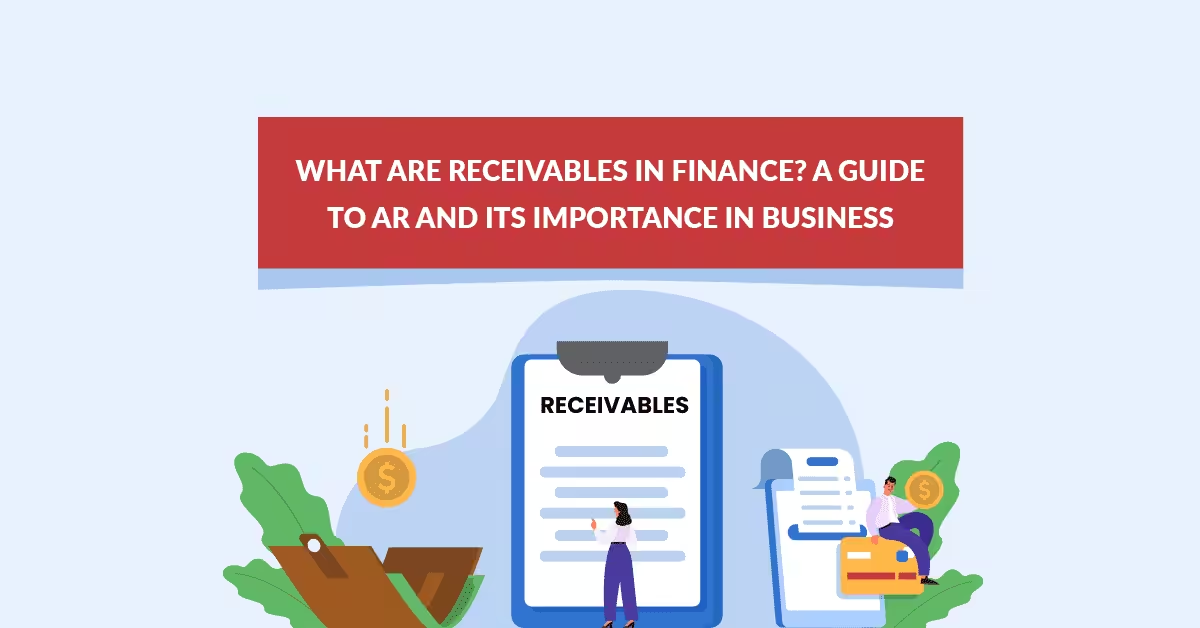
Receivables — also called accounts receivable (AR) — are the money customers owe your business for goods or services already delivered on credit, typically due in 30, 60, or 90 days. AR usually sits among the largest assets on a company’s balance sheet, and how well you manage it determines how much cash you actually have on hand.
This guide breaks down how accounts receivable works, why it matters for your business, and how invoice factoring turns unpaid invoices into working capital without adding new debt.
How Accounts Receivable Works
AR follows a predictable cycle:
- Issue the invoice. You deliver goods or services and bill the customer, specifying the amount owed and payment terms (e.g., “due in 30 days”).
- Wait for payment. The customer pays within the agreed window, typically by ACH, check, or card.
- Follow up on what’s outstanding. If payment is late, the invoice becomes an outstanding receivable that needs collection follow-up.
- Settle the account. Once paid, the receivable is closed out and removed from your AR balance.
The longer an invoice sits unpaid, the higher the risk it turns into bad debt — a direct hit to profitability.
Why Accounts Receivable Matters for Your Business
AR isn’t just a line item — it’s a real-time signal of financial health:
- Cash flow. Timely collections keep payroll, rent, and inventory funded without gaps.
- Customer relationships. Clear invoicing and professional follow-up protect the relationship while you get paid.
- Performance signal. How long customers take to pay reflects the strength of your sales process and customer base.
- Forecasting. Since AR represents cash you’re owed within a known window, it feeds directly into cash flow planning.
Common Accounts Receivable Challenges
- Late payments. Slow-paying customers create the cash flow gaps that force businesses to delay their own payments.
- Disputes and errors. Inaccurate or unclear invoices generate disputes that stall payment further.
- Bad debt. Invoices that go permanently uncollected are a direct loss.
- Collection overhead. Chasing overdue invoices consumes time and staff resources that could go toward growth instead.
How Invoice Factoring Turns Receivables into Cash
When slow-paying customers create a cash flow gap, invoice factoring lets you sell outstanding invoices to a factor for immediate cash instead of waiting out the payment terms.
- Fast access to cash. Initial setup typically takes 1–10 business days (commonly 3–4), and once you’re onboarded, ongoing advances fund same-day to within 24 hours of submitting an invoice.
- No new debt. You’re selling an asset, not borrowing — factoring doesn’t add liabilities to your balance sheet.
- Advances of 80%–90%. Most factors advance 80%–90% of invoice face value upfront, releasing the remainder — minus the fee — once your customer pays.
- Qualifies on your customers’ credit. Approval is based on your customers’ creditworthiness, not your company’s credit score or time in business — accessible even for newer companies with strong B2B customers.
Explore REIL Capital’s full range of financing options if factoring isn’t the right fit for your situation.
FAQ: Receivables and Invoice Factoring
What’s the difference between receivables and accounts payable?
Receivables are money owed TO you by customers; payables are money you owe to your own vendors and suppliers. They sit on opposite sides of your cash flow.
How long do customers typically have to pay an invoice?
Standard business-to-business terms are 30, 60, or 90 days from the invoice date, though the exact window depends on what you negotiate with each customer.
What happens if a customer doesn’t pay a receivable?
It becomes an outstanding receivable requiring follow-up; if it stays unpaid, it can turn into bad debt that’s written off as a loss.
Can I get funding against unpaid invoices?
Yes — invoice factoring lets you sell outstanding invoices for an upfront advance, typically 80%–90% of face value, so you don’t have to wait out your customers’ payment terms.
Does factoring receivables add debt to my balance sheet?
No. Factoring is a sale of an asset (your invoices), not a loan, so it doesn’t add new liabilities to your balance sheet.
Get Cash From Your Receivables
If slow-paying customers are creating cash flow gaps, REIL Capital’s invoice factoring turns your outstanding receivables into working capital in days, not months. Call our team to see what your invoices could unlock.