
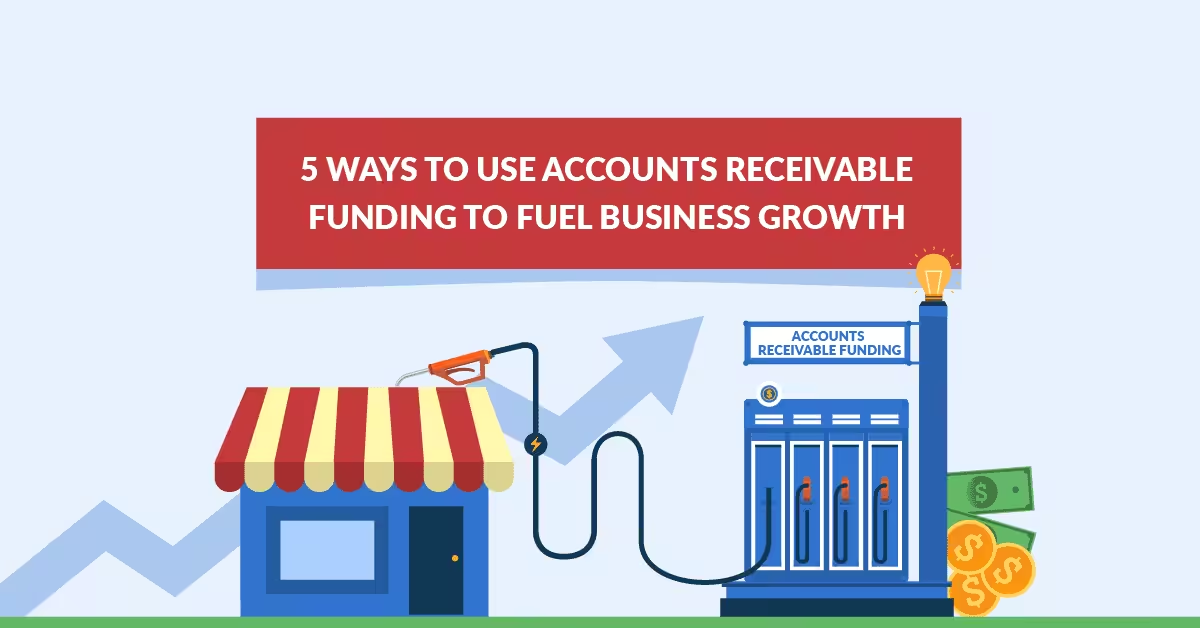
Accounts receivable (AR) funding converts your unpaid invoices into working capital today, instead of waiting 30 to 90 days for customers to pay — cash you can then put toward marketing, inventory, equipment, hiring, or steady cash flow.
Structures vary: factoring sells the invoice outright to a funding company that collects from your customer directly, while invoice financing (also called invoice discounting) lets you borrow against the invoice and keep collecting yourself. Either way, most providers advance 80%–90% of the invoice’s face value upfront, with the remainder released once your customer pays, minus fees. Here’s how businesses put that capital to work.
1. Invest in Marketing and Sales Expansion
Marketing and sales expansion take upfront cash — campaigns, CRM tools, and new-market pushes all need to be funded before they pay off. AR funding gives you that capital immediately instead of waiting on invoice terms, so growth spending isn’t gated by your slowest-paying customers. Businesses use it to:
- Launch targeted campaigns to reach new customers or deepen engagement with current ones.
- Expand sales teams and invest in tools like CRM software.
- Enter new markets through trade shows, digital advertising, or a stronger online presence.
See our complete guide to invoice factoring for a full breakdown of how the funding structure works.
2. Improve Inventory Management
Inventory is a balancing act — too much ties up capital, too little costs you sales. AR funding lets you:
- Purchase inventory ahead of seasonal demand or large customer orders.
- Negotiate supplier discounts by buying in bulk.
- Stock high-demand items or launch new products faster than your cash cycle would otherwise allow.
3. Upgrade Equipment and Technology
Businesses that depend on specialized equipment or software can use AR funding to:
- Purchase machinery or technology that improves efficiency or output.
- Implement systems like ERP software to streamline operations.
- Cut maintenance costs tied to aging equipment.
Explore invoice financing from REIL Capital if you’d rather borrow against invoices and keep managing collections yourself.
4. Expand Hiring and Workforce Development
Growth adds headcount needs before it adds cash in the bank. AR funding covers the gap so you can:
- Recruit specialized talent for innovation and product development.
- Fund training programs that improve skills and retention.
- Bring on seasonal staff for peak periods without straining payroll.
5. Smooth Out Cash Flow for Predictable Growth
Cash-flow gaps are structural, not incidental — B2B invoices commonly take 45–60 days to collect, and construction receivables can run 60–90+ days outstanding. AR funding closes that gap by advancing cash against invoices you’ve already issued, giving you:
- Reliable cash flow for rent, payroll, and other fixed costs.
- Room to offer longer payment terms to large clients who require them.
- Capital to move on opportunities as they come up, instead of waiting on receivables.
If ongoing access to working capital — not tied to a specific invoice batch — is more your speed, a business line of credit can complement or replace AR funding depending on how your receivables cycle runs.
Frequently Asked Questions
What is accounts receivable (AR) funding?
It’s a way to turn unpaid invoices into cash before your customer pays. Depending on the structure, you either sell the invoice to a funding company (factoring) or borrow against it while you keep collecting (invoice financing/discounting).
How much of my invoice can I access upfront?
Most providers advance 80%–90% of the invoice’s face value upfront, with the remainder paid out — minus fees — once your customer pays.
What does a factoring or AR funding company look at when qualifying my business?
Primarily your customers’ creditworthiness, not just your own — since repayment ultimately comes from what your customers owe. That makes AR funding accessible to younger or thin-credit businesses with financially strong customers.
Is AR funding a loan?
Factoring is a sale of assets, not a loan — you’re converting an invoice you already own into cash rather than adding debt to your balance sheet. Invoice financing/discounting is structured as borrowing against the invoice instead.
What can AR funding actually be used for?
Any working-capital need: marketing and sales expansion, inventory purchases, equipment or technology upgrades, hiring, and covering day-to-day cash-flow gaps while customers are still on 30/60/90-day terms.
Ready to put outstanding invoices to work? Talk to our team about invoice financing to see how much of your receivables you can convert to cash.




