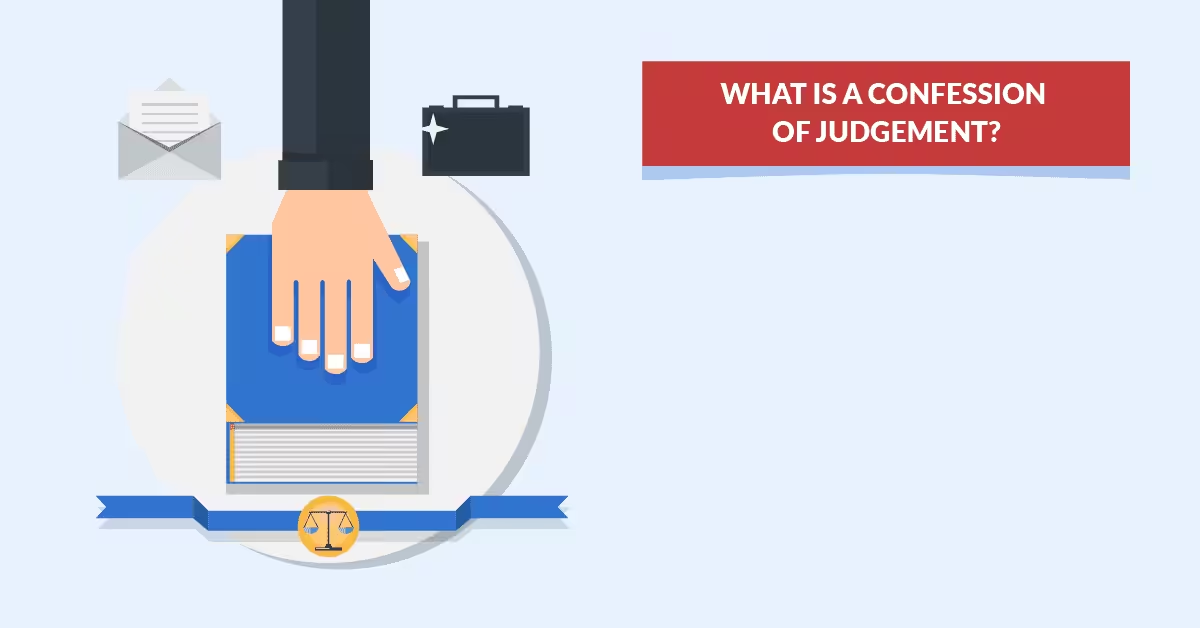
A confession of judgment (COJ) is a signed agreement in which a borrower pre-authorizes a lender to obtain a court judgment against them if they default — without a hearing or advance notice. They became common in commercial financing after the 2008 financial crisis, and their legal status now varies sharply by state: several states have banned them outright, New York restricts but hasn’t banned them, and others still permit them in some form.
For a deeper look at business finance strategies, explore our small business finance guides.
Why Lenders Use Confessions of Judgment
A COJ works like collateral without an asset attached — it lets a lender skip straight to a court judgment if a borrower defaults, rather than filing and proving a lawsuit from scratch. Lenders typically reserve them for higher-risk borrowers: thinner credit files, prior defaults, or unproven repayment history. The trade-off for the borrower is real: because a COJ waives the right to notice and a hearing, some lenders have been documented seizing borrower assets based on disputed or overstated default claims, without the borrower getting a chance to respond first.
Where Confessions of Judgment Stand, State by State
This is a genuinely shifting legal landscape, and the honest answer is “it depends on your state” — not a single national rule.
- Banned outright in commercial contracts: California (effective January 1, 2023), New Jersey (2020), Florida, and Massachusetts. Indiana goes further and criminalizes obtaining one (a Class B misdemeanor).
- Restricted but not banned — New York: a 2019 reform bars New York lenders from issuing COJs against borrowers located outside the state, but in-state New York businesses remain exposed. As of 2026, pending New York legislation (Senate Bills S2305 and S3695) would further restrict or ban COJs under $5 million and bar them from financial-product contracts generally — this has not been enacted as of this writing, so don’t treat it as current law. Separately, New York’s FAIR Business Practices Act (effective February 2026) expanded unfair/abusive-practice protections to small businesses.
- Still permitting COJs in some form: Pennsylvania, Ohio, Virginia, and others, alongside New York’s in-state carve-out above. If you’re evaluating a contract with a COJ clause, verify your specific state’s current statute — this is an actively changing area of law, not a settled one.
You may also find it helpful to read Amortization vs. Simple Interest Loans: Choosing the Right Option.
What to Do Before Signing
Confirm what your state currently allows — a COJ clause that’s enforceable in one state may be void or even illegal in another. Read the default terms closely: what exactly triggers the clause, and does the lender’s own track record on disputed defaults check out. If a lender pushes back on removing a COJ clause or won’t explain it plainly, treat that as a signal to look elsewhere.
Looking for more options? Read A Deep Dive into Business Debt Consolidation.
How REIL Capital Helps
REIL Capital puts every lending partner it works with through a screening process focused on fair lending practices, and works to get borrowers financing on transparent terms. Talk to REIL Capital about financing options for your business.
FAQ
Is a confession of judgment legal in my state?
It depends entirely on your state. California, New Jersey, Florida, and Massachusetts have banned them in commercial contracts; Indiana criminalizes obtaining one; New York restricts them for out-of-state borrowers but not in-state ones; other states, including Pennsylvania, Ohio, and Virginia, still permit them in some form. Verify your specific state’s current statute before signing anything with a COJ clause.
Can a lender get a judgment against me without notifying me?
Where COJs remain legal, yes — that’s the defining feature of the clause. The borrower waives the right to a hearing and advance notice, which is exactly why several states have moved to ban or restrict them.
Is New York’s 2026 COJ legislation already law?
No. As of this writing, New York’s pending bills (S2305, S3695) that would further restrict or ban COJs have not been enacted — don’t treat them as current law until they pass.