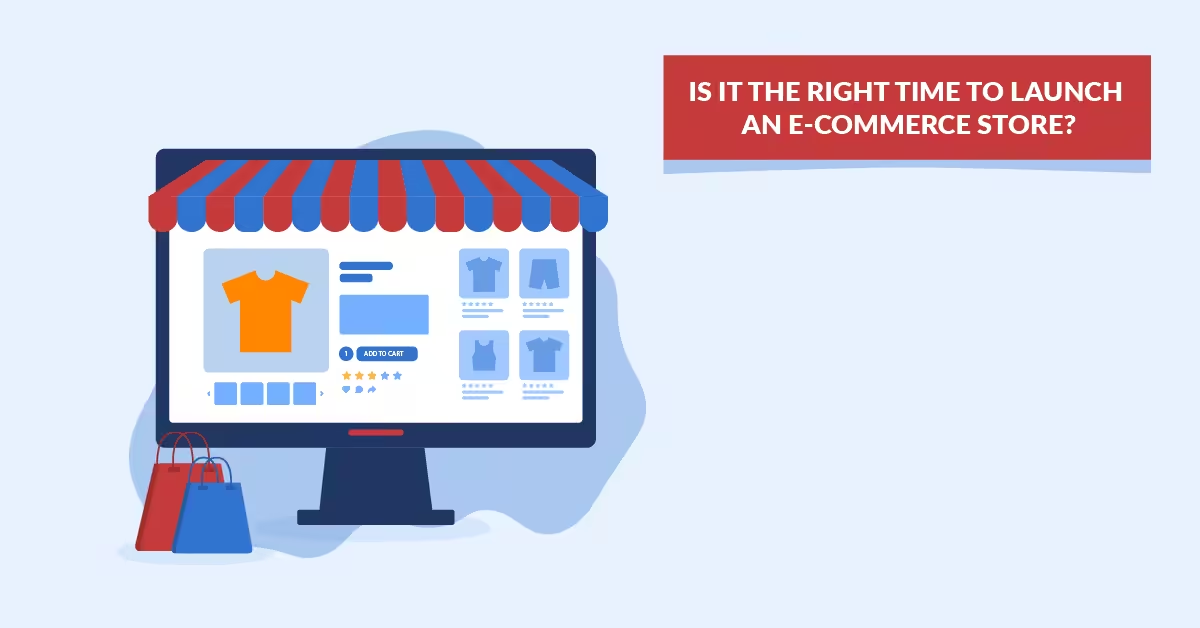
Launching an ecommerce store is a major investment for any small business, and the timing question isn’t really about the calendar — it’s about whether your business, your customers, and your cash flow are actually ready. Get the timing wrong and a launch can leave you with cash-flow gaps; get it right and an online store can open unprecedented growth.
Fortunately, figuring out whether it’s the right time comes down to a few concrete signals about your own business. Here’s how to think through the decision.
For a deeper look at business finance strategies, explore our small business finance guides.
Check the Respective E-commerce Industry Size
Before opening any business, market research is essential — and going digital is no different. Ecommerce continues to represent a large and growing share of overall retail spending, but how much varies enormously by product category and region. Before committing, research the online-buyer size and growth trend specific to your industry and target market rather than relying on economy-wide averages, which can be misleading for a niche product or a hyper-local service.
Monitor Customer Demand
When you’re running a business with a sizeable customer base, there comes a point when in-store service alone becomes the bottleneck. If your retail location is overcrowded during peak seasons, or you’re routinely out of stock because you can’t serve demand fast enough in person, that’s a real signal to think about an ecommerce store.
See If Your Products Can Target a Broader Audience
Products or services that aren’t tied to a specific location are natural candidates for ecommerce at any time. If your business isn’t restricted by geography, that’s one of the clearest indicators that an online store could expand your reach without a proportional increase in overhead.
Weigh Sales Automation Benefits
An ecommerce store lets you automate processes that are hard to automate in a physical location — inventory management, invoicing, delivery tracking, and live customer support among them. If you’re looking to reduce manual overhead as you grow, that automation is often cheaper and faster to stand up than the equivalent in-store systems.
If You Do Launch: Time Your First Big Season Right
If the signals above point to “yes,” the next timing question is just as important: when do you need financing in place? For most retail categories, Q4 (November–December) drives an outsized share of annual sales — US ecommerce demand swings roughly 54% from its February trough to its December peak, and November–December alone has averaged close to a fifth of total annual retail sales over the past five years.
The financing math behind that peak has its own timeline. Inventory purchase orders placed in July commonly require a 50% deposit upfront, with the balance due on shipping; inventory then lands in October ahead of a late-November sales ramp. That means holiday inventory financing conversations need to start 3–4 months ahead of peak — by July or August, not October. Inventory-financing applications commonly take 30–45 days to fund, and lenders get more selective in August–September as Q4 application volume surges, which is one more reason to apply early rather than waiting until the rush is already on.
You may also find it helpful to read how REIL Capital has supported small businesses through past disruptions.
Looking for more options? Read How a Debt Management Plan Can Help Your Business Save Money and Stay Afloat.
Conclusion
These signals — market size for your specific niche, customer demand outpacing your physical location, location-independent products, and the appeal of automation — can help you decide whether now is the right time to launch an ecommerce store. If you do launch, build your financing timeline around your first peak season rather than scrambling for inventory funding in October. A business line of credit is a common way to bridge that seasonal gap — the application takes about two minutes, with decisions possible within 24 hours on some products.
Frequently Asked Questions
How do I know if it’s the right time to launch an ecommerce store?
Look at four signals: whether online demand is genuinely growing in your specific product category, whether your physical location is already a bottleneck for customer demand, whether your products can serve customers outside your immediate geography, and whether automating processes like inventory and customer support would meaningfully reduce your overhead.
When should I secure financing for my ecommerce store’s first big season?
Start 3–4 months ahead of your peak. For most retailers that means beginning financing conversations by July or August for a November–December peak, since purchase orders need deposits upfront and inventory-financing applications commonly take 30–45 days to fund.
How much does ecommerce sales activity swing seasonally?
US ecommerce demand swings roughly 54% from its February trough to its December peak, and November–December alone has averaged close to a fifth of total annual retail sales over the past five years — which is why financing timed around that peak matters more than financing timed around the calendar year generally.